Title: The Complete Guide to Tracking HRV and VO2 Max: 7 Powerful Steps to Unlock Your Recovery
The Complete Guide to Tracking HRV and VO2 Max
A beginner-friendly, science-backed walkthrough for measuring, understanding, and improving your two most important recovery and fitness numbers.
Table of Contents
Why HRV and VO2 Max Matter
The Complete Guide to Tracking HRV and VO2 Max exists because these two numbers, together, give you the clearest daily picture of how your body is recovering and how fit you truly are. HRV tells you how ready your nervous system is for stress today. VO2 max tells you how efficiently your heart, lungs, and muscles use oxygen over the long run.
Most people track one or the other. Almost nobody tracks both correctly, or knows how to use them together to guide training decisions. That’s what this guide fixes.
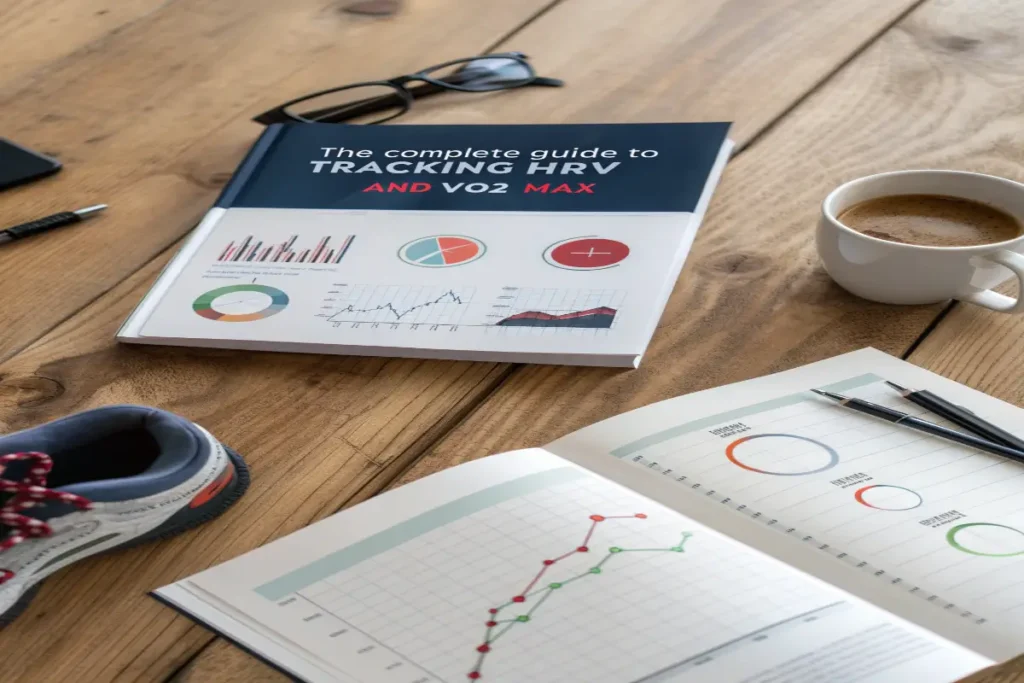
By the end of this article, you’ll know exactly which devices to use, when to measure, how to read the trends (not just the daily number), and how to turn that data into smarter training and recovery decisions.
What Is HRV (Heart Rate Variability)
Heart rate variability is the tiny, natural variation in time between each heartbeat. A healthy, well-recovered nervous system produces more variation. A stressed, under-recovered, or overtrained body produces less.
This isn’t just fitness-influencer folklore. According to the Cleveland Clinic, HRV reflects how adaptable your body is — people with higher heart rate variability tend to be less stressed and better able to handle changing situations, while low HRV is often a sign of current or future health strain. HRV essentially captures how your autonomic nervous system is responding to daily stressors, which is exactly why it’s become such a popular readiness metric.
Why HRV Fluctuates Day to Day
- Poor sleep quality or short sleep duration
- Alcohol, late meals, or intense evening workouts
- Illness, inflammation, or emotional stress
- Travel, altitude changes, or dehydration
- Menstrual cycle phase
None of these are “bad” on their own — HRV is meant to fluctuate. The goal is to track your personal trend line, not chase a single perfect number.
What Is VO2 Max?
VO2 max is the maximum amount of oxygen your body can use per minute during intense exercise, expressed in milliliters per kilogram of body weight per minute (mL/kg/min). It’s widely considered the gold-standard measure of cardiorespiratory fitness.
In 2016, the American Heart Association published a scientific statement recommending that cardiorespiratory fitness — quantifiable as VO2 max — be regularly assessed and used as a clinical vital sign, based on evidence linking low fitness levels to higher cardiovascular disease and mortality risk.
Unlike HRV, VO2 max doesn’t swing day to day. It moves slowly, over weeks and months, in response to consistent aerobic training.
How to Track HRV Accurately
Getting a useful HRV reading depends far more on consistency than on the specific gadget you use.
Step-by-Step HRV Tracking Protocol
- Measure at the same time every day — first thing after waking, before coffee or getting out of bed, is ideal.
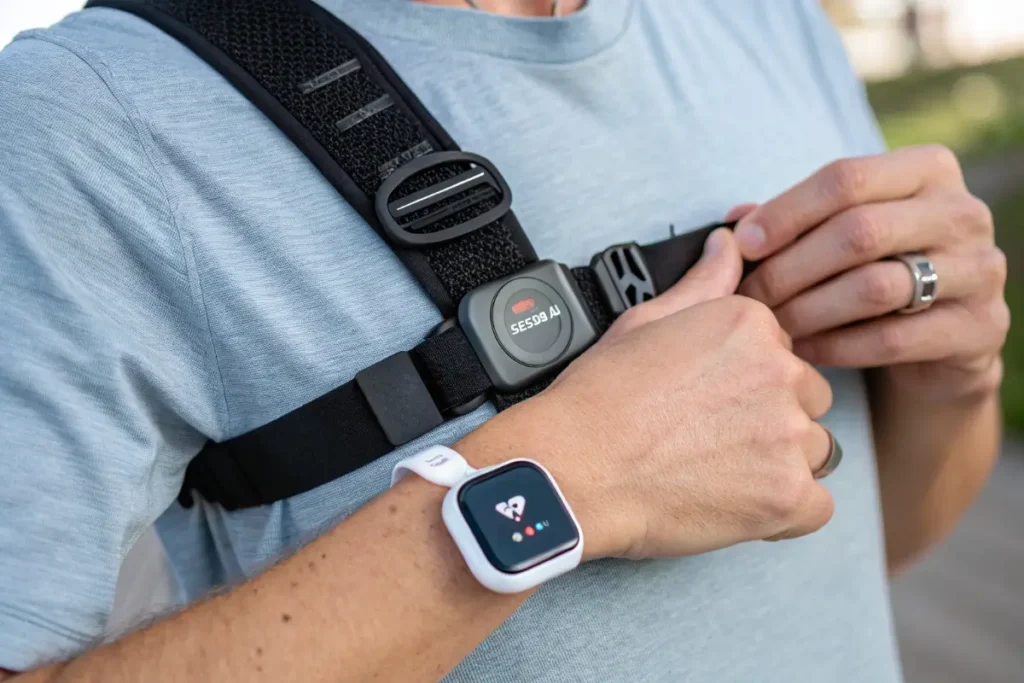
- Use the same device or app — chest straps are generally more accurate than wrist-based optical sensors.
- Stay still and breathe normally for the full measurement window (usually 1–5 minutes).
- Log it daily, even on “bad” days — one-off numbers mean nothing without a trend.
- Review your 7-day rolling average, not the single-day score, to spot real changes in recovery.
Popular options include chest-strap monitors paired with dedicated HRV apps, or built-in tracking on modern smartwatches and rings. Whichever you choose, don’t switch devices mid-tracking period — different sensors calculate HRV differently, and swapping tools will make your trend line meaningless.
How to Track VO2 Max Accurately
There are three realistic ways to measure VO2 max, ranked from most to least precise.
1. Laboratory Cardiopulmonary Exercise Test (CPET)
You run or cycle at increasing intensity while wearing a mask that measures oxygen intake and carbon dioxide output directly. This is the true gold standard, but it requires a lab, sports science clinic, or hospital.
2. Wearable Estimation
Smartwatches and rings estimate VO2 max using your heart rate response during runs, combined with pace and personal data (age, weight, sex). It’s not lab-precise, but it’s reliable enough to track trends over time, which is what actually matters for training decisions.
3. Field Tests
Standardized tests like the Cooper 12-minute run or a timed 1.5-mile run can be plugged into a formula to estimate VO2 max without any equipment beyond a stopwatch and a track.
Whichever method you pick, retest under the same conditions (same course, same weather, same effort level) every 6–8 weeks to see real progress.
Reading Your Numbers: What’s “Good”?
HRV and VO2 max are both highly individual. Comparing your raw number to a friend’s is rarely useful — comparing it to your own baseline is where the value lives.
For HRV:
- Focus on whether your 7-day average is trending up, flat, or down
- A sharp single-day drop after a hard workout or poor sleep is normal
- A sustained multi-week decline is a signal to prioritize recovery
For VO2 max:
- Higher is generally better for endurance and longevity outcomes
- Values naturally decline with age unless you train consistently against that decline
- A rising trend over 2–3 months indicates your aerobic base is genuinely improving
How to Improve Both Metrics Together
The good news: the habits that improve HRV and the habits that improve VO2 max overlap significantly.
- Build a consistent aerobic base. Easy-paced, low-intensity cardio is one of the most effective ways to raise VO2 max over time. If you want a structured approach to this, our Zone 2 Training Protocols for Mitochondrial Health guide breaks down exactly how to structure these sessions.
- Don’t neglect strength work. Building and maintaining muscle supports metabolic health and long-term resilience, which shows up in both your HRV trend and your functional capacity. See our Ultimate Guide to Functional Strength for Longevity for a full program.
- Support recovery at the cellular level. Sleep, hydration, and targeted nutrition all influence how quickly your nervous system bounces back between sessions — a topic we cover in depth in our guide to Micronutrient Protocols for Cellular Recovery.
- Prioritize sleep consistency. Irregular sleep timing is one of the fastest ways to tank your HRV trend, even if total sleep hours look fine.
- Manage training load. Alternate hard and easy days deliberately instead of going hard every session — this is where daily HRV readings genuinely earn their keep.

Common Tracking Mistakes to Avoid
- Chasing the daily number. One low HRV reading is noise, not a diagnosis.
- Switching devices frequently. This breaks your trend line and makes the data useless.
- Ignoring context. Alcohol, illness, travel, and stress all affect HRV independently of training.
- Testing VO2 max in inconsistent conditions. Heat, wind, and terrain all skew field-test results.
- Comparing yourself to population averages instead of tracking your own baseline over time.
For readers who want a deeper technical dive into the research behind HRV as a health marker, the Frontiers in Public Health overview of HRV metrics and norms is a well-regarded academic resource, and the Cleveland Clinic’s explainer on heart rate variability is a solid plain-language starting point.
Next Steps
Tracking HRV and VO2 max together gives you something most training plans lack: a daily readiness signal and a long-term fitness signal, working side by side. HRV tells you what your body can handle today. VO2 max tells you how much progress you’re making this quarter.
Start simple. Pick one device, measure HRV every morning under the same conditions, and retest your VO2 max estimate every 6–8 weeks. Within a month, you’ll have enough data to start making smarter decisions about when to push and when to back off — which is the entire point of The Complete Guide to Tracking HRV and VO2 Max.
Ready to put this into action? Start your morning HRV log today, and pair it with a Zone 2 session this week to begin building your aerobic base.