

Micronutrient Protocols for Cellular Recovery: 7 Proven Steps to Recharge Faster in 2026
Table of Contents
1. What Are Micronutrient Protocols for Cellular Recovery?
Micronutrient protocols for cellular recovery are structured, evidence-informed plans for consuming vitamins, minerals, and antioxidants in a way that supports how your cells repair themselves after stress, training, or illness. Instead of guessing which supplement to grab, a protocol gives you a repeatable system: what to eat, when to eat it, and why it matters.
Every workout, poor night of sleep, or bout of illness creates tiny amounts of cellular damage. Your body already knows how to fix this — but it needs raw materials to do the job well. That’s where targeted micronutrient protocols for cellular recovery come in.

In this guide, you’ll get a practical, beginner-friendly breakdown of the nutrients that matter most, a sample protocol you can start using this week, and the timing strategies that top coaches and clinicians recommend.
2. Why Cellular Recovery Depends on More Than Just Rest
Most people think recovery is simply “resting more.” Rest matters, but it’s only half the picture. Recovery is a biological process, and biological processes run on nutrients.
When muscle fibers, mitochondria, and connective tissue experience stress, your body activates repair pathways that require:
- Antioxidants to neutralize oxidative stress
- Minerals to support enzyme function and muscle contraction
- B-vitamins to convert food into usable cellular energy
- Protein-building cofactors like zinc and magnesium
Without these building blocks, recovery slows down — even if you’re sleeping eight hours a night. This is exactly why athletes who follow structured functional strength training programs also pair their training with deliberate nutrition planning, not just heavier lifts.
3. The Core Micronutrients Your Cells Need to Repair
Here are the micronutrients that show up most consistently in cellular recovery research.
Magnesium
Magnesium supports over 300 enzymatic reactions, including those involved in muscle relaxation and energy production. Low magnesium is linked to increased muscle soreness and poor sleep quality, both of which slow recovery.
Vitamin C
Vitamin C helps regenerate other antioxidants in the body and supports collagen synthesis, which is essential for repairing connective tissue after intense activity.
Zinc
Zinc plays a direct role in protein synthesis and immune function. Athletes with inadequate zinc intake often report longer recovery windows and more frequent minor illnesses.
B-Complex Vitamins
B-vitamins (especially B6, B12, and folate) are central to converting carbohydrates and fats into usable cellular energy — a process that becomes even more important during high-volume training blocks.
Selenium and Vitamin E
These two work together as an antioxidant pair, helping to reduce the oxidative damage that naturally builds up during intense mitochondrial activity — a topic covered in more depth in this Zone 2 training protocol guide.
For deeper, research-backed dosage ranges, the NIH Office of Dietary Supplements maintains updated fact sheets on each of these micronutrients.

EnduNAD is an advanced dietary supplement designed for individuals who wish to ensure adequate levels of NAD+, a key compound involved in the body’s energy processes. Through precisely selected ingredients, EnduNAD supports the mechanisms related to NAD+ production and cysteine synthesis, which are important for cellular health.
This supplement is designed for people with a busy lifestyle who experience fatigue and want to improve their body’s regeneration. It is ideal for physically active individuals, as well as those looking to enhance their concentration, productivity, and overall daily vitality.
4. A Sample Micronutrient Protocol for Cellular Recovery
Below is a simplified starting-point protocol. Always adjust based on your body size, training load, and any guidance from a registered dietitian or physician.
| Micronutrient | Primary Role in Recovery | Food Sources | General Daily Target* |
|---|---|---|---|
| Magnesium | Muscle relaxation, energy metabolism | Spinach, pumpkin seeds, almonds | 310–420 mg |
| Vitamin C | Antioxidant, collagen repair | Citrus fruit, bell peppers, kiwi | 65–90 mg |
| Zinc | Protein synthesis, immunity | Oysters, beef, lentils | 8–11 mg |
| Vitamin B12 | Cellular energy production | Eggs, salmon, fortified cereal | 2.4 mcg |
| Selenium | Antioxidant enzyme cofactor | Brazil nuts, tuna, eggs | 55 mcg |
| Vitamin E | Antioxidant, membrane protection | Sunflower seeds, almonds | 15 mg |
Targets reflect general population reference intakes and are not individualized medical advice. Consult a healthcare provider before starting any new supplement protocol.
5. How to Time Your Micronutrient Intake Around Training
Timing can meaningfully affect how well your body uses these micronutrients.
- Pre-workout: A light meal containing B-vitamins and complex carbohydrates supports steady energy output.
- Post-workout (within 60 minutes): Prioritize protein alongside vitamin C and zinc-rich foods to kickstart tissue repair.
- Before bed: Magnesium-rich foods or a magnesium supplement may support deeper sleep, which is when much of the cellular repair process actually happens.
If you’re already tracking recovery metrics, pairing this timing strategy with data from a complete guide to tracking HRV and VO2 max can help you see, objectively, whether your micronutrient protocol is working.
6. Common Mistakes That Sabotage Cellular Recovery
- Relying only on supplements and ignoring whole-food sources, which offer additional co-factors that pills don’t provide.
- Megadosing single nutrients instead of following balanced ratios — more is not always better, and some micronutrients compete for absorption.
- Skipping hydration, which is required for nutrient transport at the cellular level.
- Inconsistent timing, taking nutrients sporadically instead of on a repeatable daily rhythm.
- Ignoring sleep, since even a perfect micronutrient protocol can’t compensate for chronic sleep deprivation.
A peer-reviewed overview of these interactions is available through PubMed/NCBI, which indexes current clinical research on micronutrient status and exercise recovery.
7. How Micronutrient Protocols Fit Into a Bigger Longevity Strategy
Cellular recovery isn’t just about bouncing back from a single workout — it’s a foundational piece of long-term healthy aging. Micronutrient protocols for cellular recovery work best when layered into a broader system that includes strength training, aerobic conditioning, and objective recovery tracking.
For a well-rounded approach, many coaches recommend combining:
- A structured resistance training plan, such as the one outlined in The Ultimate Guide to Functional Strength for Longevity
- Aerobic base-building through Zone 2 training to support mitochondrial density
- Consistent monitoring using the methods in this HRV and VO2 max tracking guide
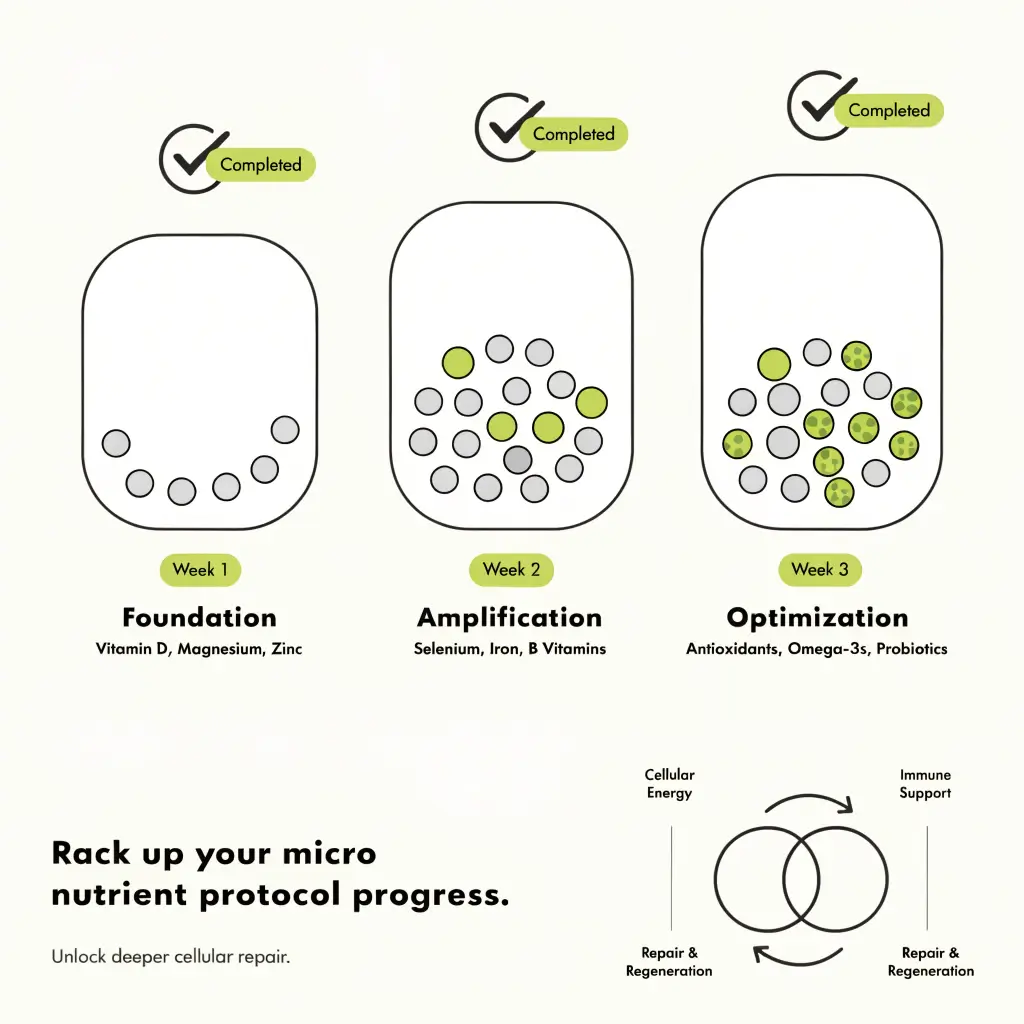
- A daily micronutrient protocol, as outlined above, to supply the raw materials recovery depends on
For additional evidence summaries on individual nutrients and supplement efficacy, Examine.com offers regularly updated, citation-backed research reviews.
8. FAQ: Micronutrient Protocols for Cellular Recovery
How long does it take to notice results from a micronutrient protocol? Most people report improvements in energy and soreness within 2–4 weeks of consistent intake, though full cellular adaptation can take longer.
Can I get everything I need from food alone? For many people, yes — but high training volumes, restrictive diets, or certain health conditions may require targeted supplementation. A blood panel can help identify actual deficiencies.
Is more supplementation always better for recovery? No. Excess intake of certain micronutrients, particularly fat-soluble vitamins, can be counterproductive or even harmful. Balance and consistency matter more than high doses.
9. Next Steps
Recovery isn’t just about taking a rest day — it’s a biological process that depends on the right micronutrients, at the right time, in the right amounts. Well-designed micronutrient protocols for cellular recovery give your body the tools it needs to repair faster, train harder, and stay resilient over the long term.
Ready to put this into action? Start by auditing your current diet against the table above, then layer in the training and tracking strategies from our related guides below