The Ultimate Guide to Functional Strength for Longevity 2026
Table of Contents

functional strength for longevity 2026
I still remember the moment I stopped training to look good and started training to last. I was in my mid-thirties, watching my own father struggle to get up off the floor after playing with my nephew, and it hit me: strength isn’t really about the mirror. It’s about whether you can carry your own groceries, chase your kids, and get off the ground unassisted when you’re 70, 80, or 90 years old. That single realization is what pushed me to build my entire coaching philosophy around functional strength for longevity 2026 and it’s exactly what I want to walk you through in this guide.
If you’ve ever wondered how to train not just for six months from now, but for the next six decades, this article is your roadmap. I’ll break down the science in plain language, give you a beginner-friendly framework, and show you exactly how zone 2 training, mitochondrial health, hybrid training, and biometric tracking all fit together into one longevity-focused system.
What Is Functional Strength Training, Really?
Functional strength training means building muscle and movement patterns that transfer directly to real life squatting, hinging, pushing, pulling, carrying, and rotating. Unlike bodybuilding-style isolation work, functional training prepares your joints, tendons, and nervous system for the unpredictable demands of daily living and aging.
Here’s the coaching cue I give every beginner: if a movement doesn’t resemble something you’d do outside the gym picking up a suitcase, climbing stairs, standing up from a low couch it probably belongs as an accessory, not your main focus.
The research on this is consistent: preserving muscle mass and strength as we age is one of the strongest predictors of independence, mobility, and even lifespan. That’s why I built FitnessBRGM around tools and programs that measure your starting point first — if you haven’t already, run your numbers through our Body Fat Calculator and BMI Calculator so you know exactly where you’re beginning from.
Why Longevity Training Is Different From “Getting Fit”
Most people train for the next 12 weeks. Longevity training asks a harder question: will this program still make sense when I’m 65? That shift changes everything about how I coach.
Three pillars define a true longevity-based training system:
- Cardiovascular efficiency – built through zone 2 training protocols
- Cellular energy capacity – supported by mitochondrial fitness
- Total-system resilience – developed through high performance hybrid training
Let’s go through each one, because together they form the backbone of functional strength for longevity.
Zone 2 Training Protocols: The Aerobic Foundation
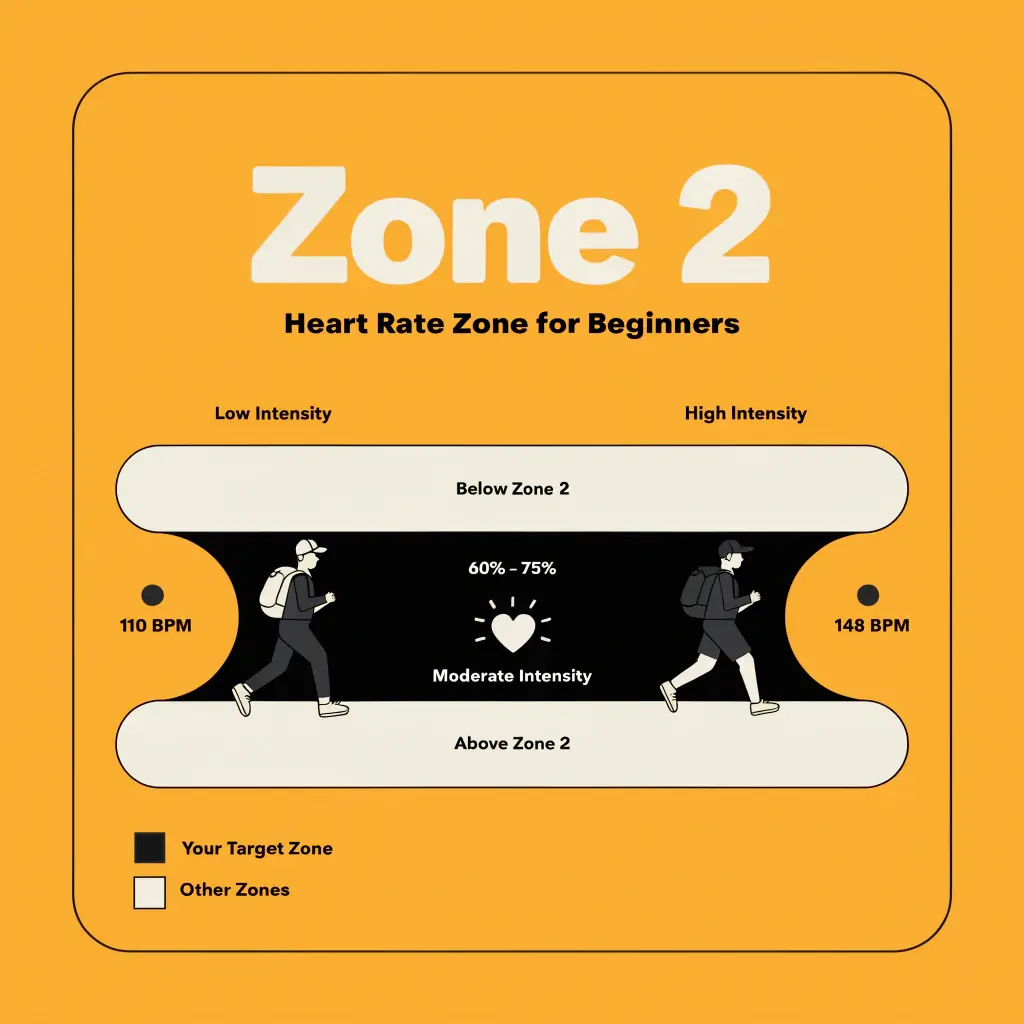
If there’s one concept I wish every beginner understood before they touch a barbell, it’s zone 2 training protocols. Zone 2 is a heart-rate zone roughly 60-70% of your max heart rate where you can hold a conversation but still feel like you’re working. It’s uncomfortable to keep slow at first, especially for beginners who want to sprint everything, but this is where the magic happens.
Training in zone 2 for 30-45 minutes, 2-4 times per week, builds your aerobic base without hammering your joints or nervous system. This matters enormously for longevity because a strong aerobic engine is directly linked to lower all-cause mortality risk and better recovery between strength sessions.
My beginner zone 2 protocol:
- Week 1-2: 20 minutes, brisk walk or easy incline treadmill, 3x/week
- Week 3-4: 30 minutes, same intensity, 3x/week
- Week 5+: 40-45 minutes, 3-4x/week, optionally adding light cycling or rowing
A simple way to check yourself without a heart rate strap: if you can’t complete a full sentence out loud, you’re working too hard. Slow down.
Mitochondrial Fitness Guide: Training Your Cellular Engine
Here’s where a lot of beginner content stops short, and where I think coaching gets interesting. Your mitochondria the energy-producing structures inside your cells are trainable.
A mitochondrial fitness guide isn’t just biology trivia; it’s the “why” behind zone 2 training and metabolic health.
When you train consistently in zone 2, combine it with resistance training, and support it with adequate protein and sleep, your body responds by building more mitochondria and making the ones you have more efficient.
This is often called mitochondrial biogenesis, and it’s one of the most promising levers we have for aging well better energy, better fat metabolism, and better resilience against age-related muscle loss (sarcopenia).
Three habits that support mitochondrial fitness:
- Consistent zone 2 cardio (see above)
- Resistance training 2-4x/week to stimulate muscle-level adaptations
- Adequate protein intake use our Macro Calculator to find your daily target
I’ll be honest with you: there’s no shortcut supplement that replaces these three habits. Anyone promising otherwise is selling you something.
High Performance Hybrid Training: Combining Strength and Endurance
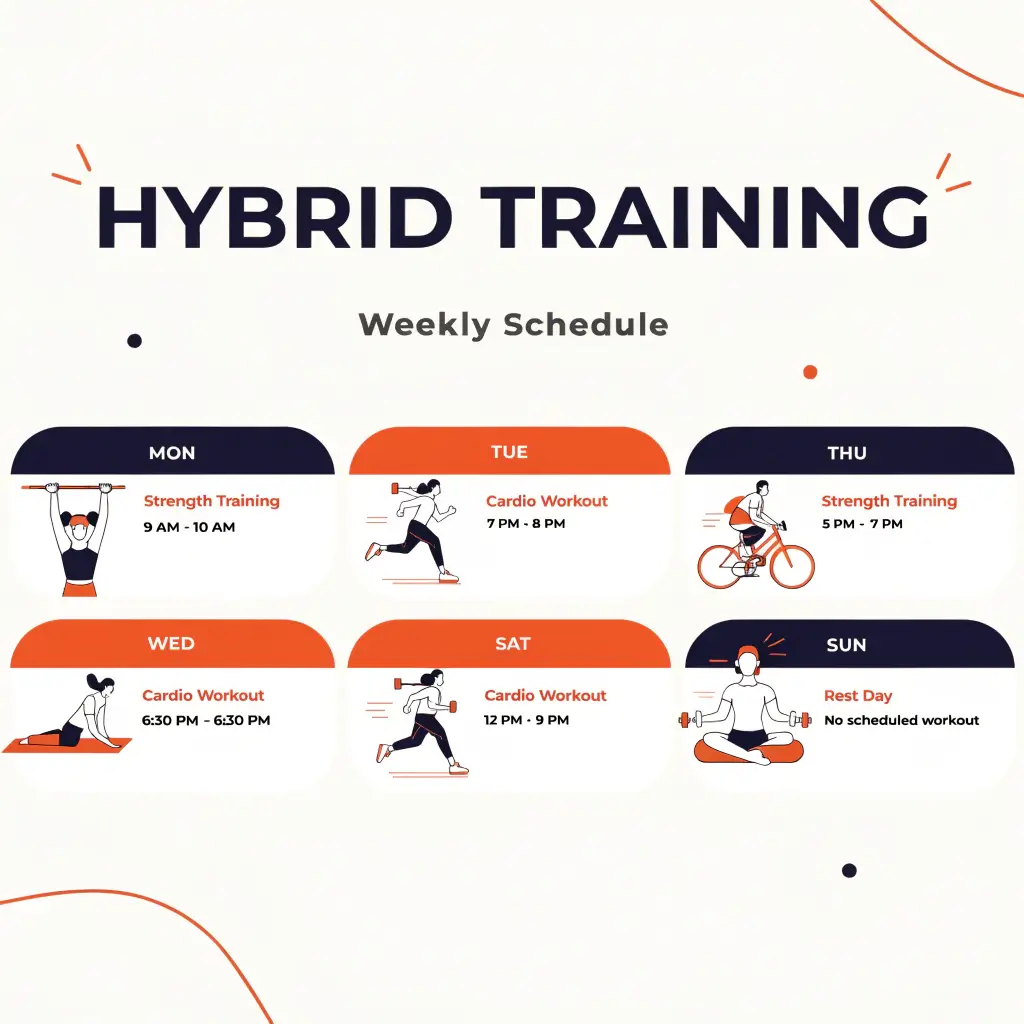
This is where functional strength for longevity really comes together. High performance hybrid training simply means training both strength and endurance qualities in the same program, rather than picking one lane forever. For decades, the fitness industry pushed people toward “cardio people” or “lifting people.” Longevity science tells a different story you need both.
My beginner hybrid training week:
| Day | Focus |
|---|---|
| Monday | Full-body functional strength (squat, hinge, push, pull, carry) |
| Tuesday | Zone 2 cardio, 30 minutes |
| Wednesday | Rest or mobility work |
| Thursday | Full-body functional strength |
| Friday | Zone 2 cardio, 30-40 minutes |
| Saturday | Optional: light hike, bike, or recreational sport |
| Sunday | Full rest |
Notice there’s no exhausting daily grind here. Longevity training respects recovery as much as effort overtraining is just as damaging to long-term progress as inactivity.
If you’re unsure how many calories you need to fuel this kind of week, our Calorie Calculator and BRGM AI Coach can help you personalize the plan instead of guessing.
Biometric Health Optimization: Tracking What Actually Matters
I used to think tracking was only for advanced athletes. I was wrong. Biometric health optimization monitoring things like resting heart rate, heart rate variability (HRV), body composition, and sleep quality gives beginners something priceless: proof that the plan is working, long before the mirror shows it.
Beginner-friendly biometrics worth tracking:
- Resting heart rate – should trend downward as your aerobic base improves
- Body composition – track monthly, not daily, using our AI Body Fat Analyzer
- Sleep consistency – aim for a stable wake time, even on weekends
- Grip strength – a surprisingly strong predictor of overall longevity, easy to track with a basic dynamometer
You don’t need a lab. A basic smartwatch, a monthly check-in with FitnessBRGM’s tools, and honest self-observation will get you 90% of the way there.
Putting It All Together: A Sample 4-Week Starting Framework
For my beginner clients, I never introduce all four pillars at once. Here’s the order I coach in:
- Weeks 1-2: Establish zone 2 cardio and two full-body strength sessions
- Weeks 3-4: Add a third strength session and begin tracking biometrics monthly
- Month 2 onward: Layer in hybrid programming and start optimizing nutrition around your numbers
This gradual build protects beginners from the two most common failure points I see: doing too much too soon, and quitting because progress felt invisible.
Common Mistakes I See Beginners Make
- Skipping zone 2 because it “feels too easy.” The boredom is the point that’s aerobic efficiency being built.
- Chasing soreness instead of progress. Recovery is training too.
- Ignoring biometric feedback. Numbers catch plateaus before your motivation does.
- Training strength or cardio exclusively. Longevity requires both, not either/or.
Frequently Asked Questions
How long before I see results from functional strength training?
Most beginners notice better energy and easier daily movement within 3-4 weeks, with visible strength and composition changes typically appearing around week 8-12.
Can I do zone 2 training and strength training on the same day?
Yes, but I recommend separating them by several hours or doing strength first when your nervous system is freshest, especially as a beginner.
Do I need expensive equipment to start hybrid training?
No. Bodyweight, resistance bands, and a brisk walking routine are enough to start; equipment can be added as you progress.
My Final Coaching Note
Functional strength for longevity isn’t a 12-week program — it’s a relationship you build with your own body over decades. Start with zone 2, respect your mitochondrial health, blend strength and endurance through hybrid training, and let your biometrics guide the adjustments. That’s the whole system, and it’s exactly what I coach every FitnessBRGM client toward.
If you want a personalized starting point, run your numbers through our free tools — BMI Calculator, Body Fat Calculator, Calorie Calculator, and Macro Calculator — or chat with the BRGM AI Coach to build your first four weeks today.